

Field notes for the
modern editorial team
Writing, case studies, and practice guides from publishers, funders, and editors-in-chief working with semantic AI in production peer review.
Latest from the blog

A Reviewer-Rotation Playbook for Portfolio Publishers
Managing reviewer pools across multiple journals isn’t just an operational task anymore. It’s a strategic one. Portfolio publishers often face a hidden challenge: the same reviewers get reused across imprints.

Calibrating Retraction Strictness Without Losing Breadth
Retraction filters protect reviewer selection integrity — but the stricter the filter, the narrower the pool. The real challenge is calibrating strictness and breadth without sacrificing discovery.

What does a 1024-dimensional embedding represent?
A 1024-dimensional embedding is not a summary of a manuscript — it is a statistical representation of how that manuscript relates to all other text the model has seen.

Quantifying Geographic Diversity in Reviewer Panels
Geographic diversity in peer review is often discussed as a principle. Rarely is it measured with precision — and that gap creates structural imbalance in who shapes review decisions.
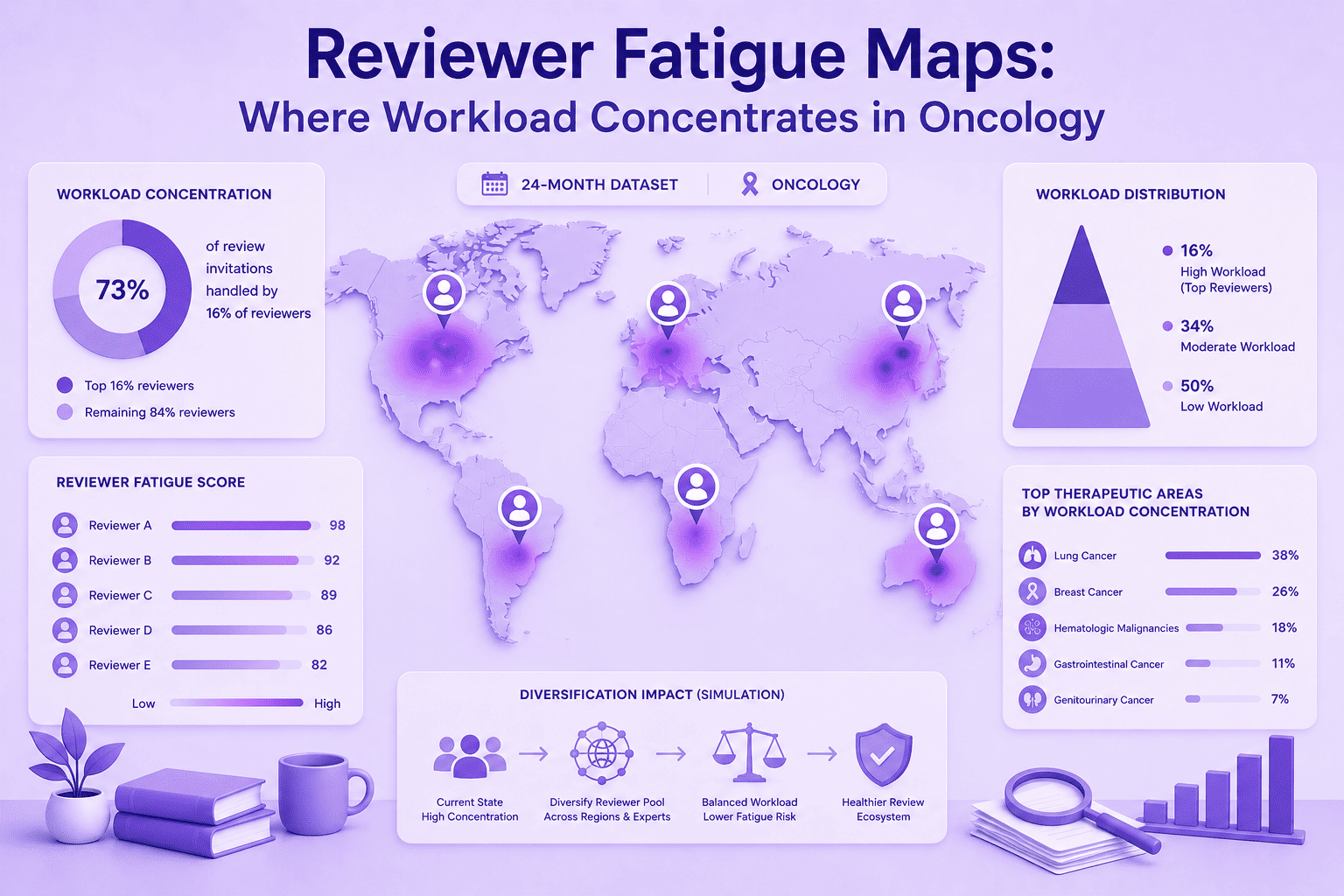
Reviewer Fatigue Maps: Where Workload Concentrates in Oncology
Reviewer fatigue is measurable and increasingly concentrated among a small subset of experts. In oncology, a 24-month dataset reveals where workload concentrates.

Why Concept Extraction Outperforms Boolean Queries in STM
Boolean queries miss relevant experts who use different terminology — often exceeding 30% hidden loss of reviewer coverage. Concept extraction shifts the focus from matching words to understanding meaning.